

Clipless pedals!
How to choose clipless pedals
The first thing to consider when shopping for pedals is how you’re going to use them, since there are major differences between mountain and road pedals. Next, you need to understand what you’re looking to get out of clipless pedals, as each model has its own pros and cons. If you come into the shop knowing how you’ll use them and why you need clipless pedals, we can take care of you and make sure you leave with the pedals that best suit your needs.
The clipless pedal myth
First, let’s be clear about one thing: clipless pedals do not save you energy and do not improve your pedaling because you can pull up on the pedals. Following the study titled "The Pedaling Technique of Elite Endurance Cyclists: Changes With Increasing Workload at Constant Cadence" published in 1991, it was found that the effort produced during the downstroke represents between 96.3% and 98.6% of the total effort of a full pedal revolution. In other words, you apply force when you push, not when you pull—and if you do pull, the effort involved is negligible.
Road pedals
When it comes time to choose a pedal, you first have to decide between the two main pedal families: road pedals or mountain bike pedals. The difference between them is striking due to their design and because road pedals can only be used on one side (with the exception of Speedplay pedals).
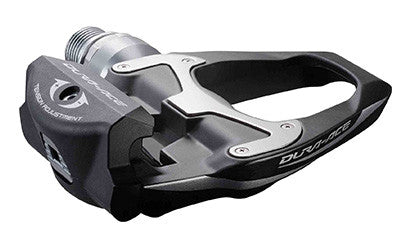
Because the pedal is only used on one side, it allows for a much larger platform to support your foot. The result is better pressure distribution and often greater overall comfort. On the downside, road pedals can be less than ideal for cyclists who like to do a bit of sightseeing on their rides, since the shoe will limit you to short walking distances—you’re walking directly on the cleat, which is often made of plastic. Road pedals are ideal for those who ride at a more intense level and hardly ever stop. These cyclists can live with the impractical nature of road pedals in exchange for more performance.
Float
The angular float of your pedal—or simply “float”—is an important factor to consider. Float is the amount of lateral movement your leg has before the pedal releases. This is important for riders with sensitive knees or those who move around a lot on the saddle and tend to slide forward on climbs. If you choose Look pedals, you’ll have three cleat options: black with 0° float, grey with 4.5°, or red with 9°.
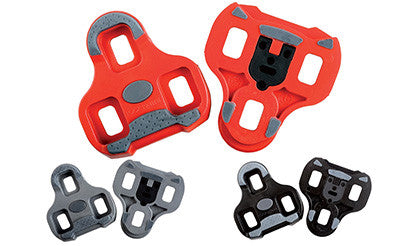
Note that the gray cleat is the one that comes stock with the pedals. Shimano also offers a choice of cleats to adjust your float, with 0°, 2° and 6° options.
Mountain pedals
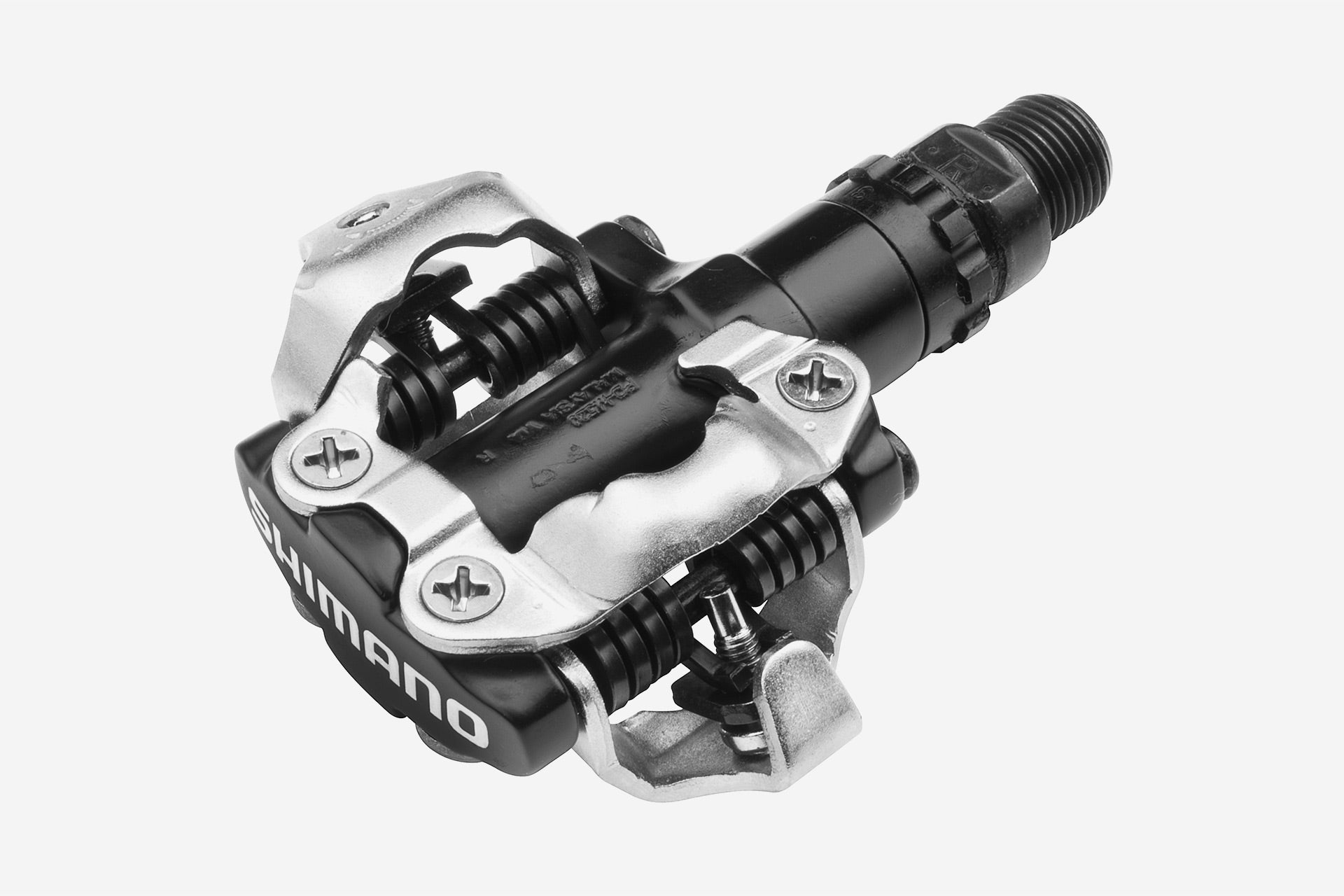
Mountain bike pedals can be used on both sides, which is very practical when you need to clip out and back in quickly. On the other hand, mountain pedals offer a smaller support platform, which can create a pressure point directly under the foot for some cyclists. Several clip-in systems have been developed by manufacturers over the years, such as Shimano’s SPD system or Crank Brothers’ All Access system.

In general, Shimano pedals are known for greater reliability, but only average ease of engagement, especially when the trails are quite wet. However, you can adjust the spring tension on Shimano pedals, which is greatly appreciated by both beginner and experienced riders. Crank Brothers pedals, on the other hand, use a completely open system where mud and dirt won’t prevent you from clipping in freely.