

Chain maintenance: not as simple as it looks!
How to maintain your chain in three easy steps
Note that the following chain maintenance tips apply more to road and urban bikes (hybrids, city bikes) than to mountain bikes. We’ll go into more detail in another article to demystify chain maintenance for off-road bikes.
Step 1: I have a new bike—when should I lubricate my chain?
Cyclists are often tempted to lubricate their chain too frequently, so the saying “too much is as bad as not enough” definitely applies! Before each ride—or at least on a regular basis—take the time to check the condition of your chain.
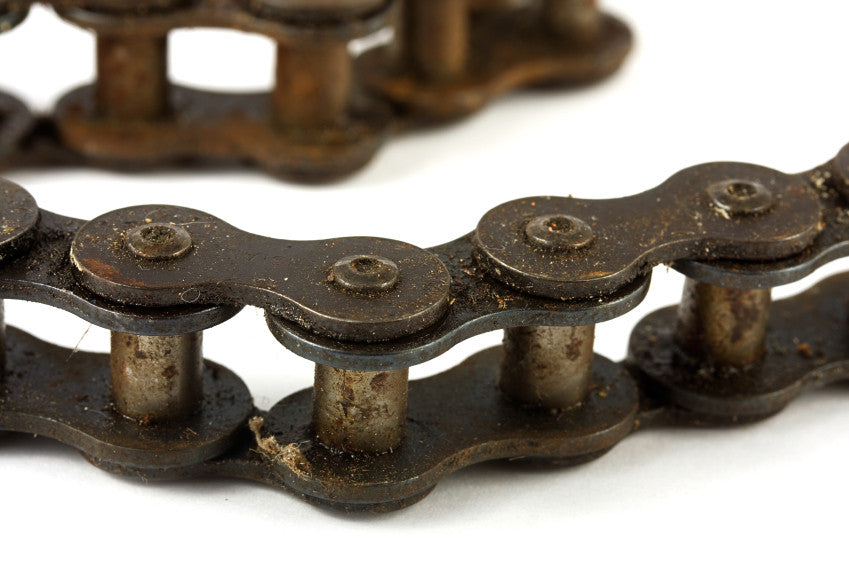
First, make sure your bike is standing upright. Then take a rag in your left hand and wrap it around the chain, holding it firmly; with your right hand, turn the crankset counterclockwise. This will remove the built-up dirt. Look at your rag: if there’s a black oil mark, it means your chain is sufficiently lubricated and you don’t need to add more.
If applicable, I must lubricate my chain.
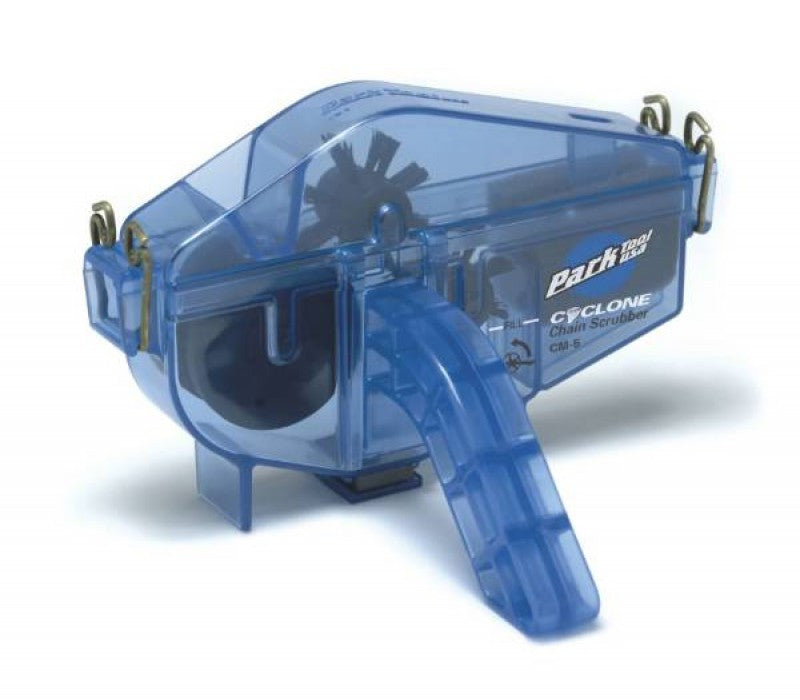
First, make sure you’ve cleaned everything properly. Run a rag over the chain, pinch the jockey wheels to be sure you’ve removed anything that might have stuck there and thus avoid forming a crust. If a rag doesn’t seem sufficient, there are several handy brush types such as the Finish Line Grunge Brush or the Park Tool CM-5.2 chain scrubber (can be used alone or with a degreaser). Use them dry at first; the goal is to remove the dirt that has built up between the links of your chain.
Step #2: Which lubricant should I buy to maintain my chain?
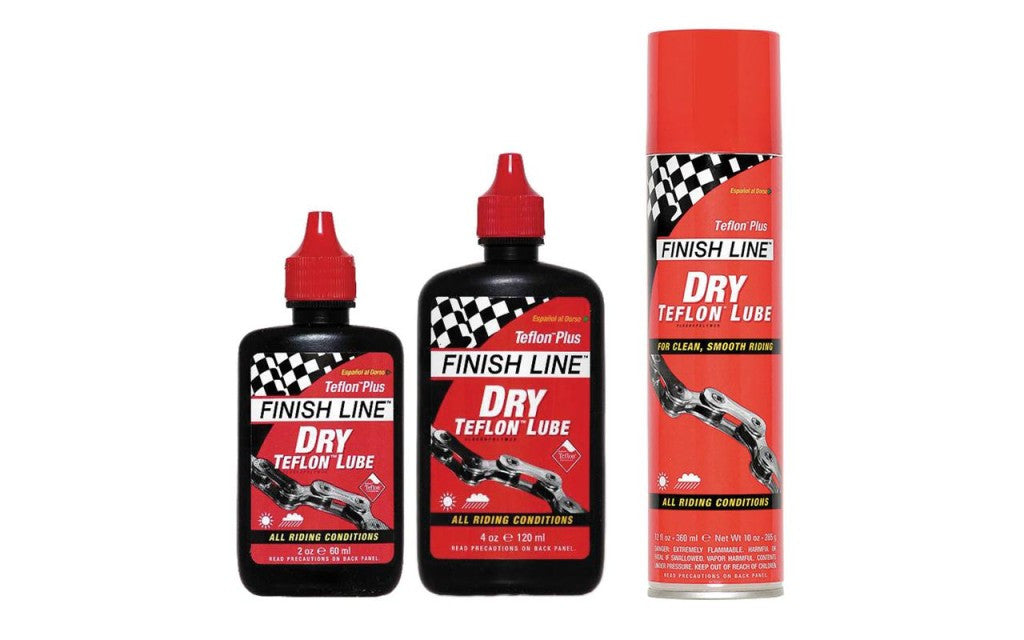
There are countless brands and types of oils and lubricants, but unfortunately some of them can damage your drivetrain and even cause dirt to build up. Everything that sticks, accumulates and cakes on can sometimes be impossible to remove and may even require you to buy a new drivetrain (in extreme cases). It’s therefore very important to choose your lubricant carefully, depending on the conditions in which you ride. Most of the time, we ride on dry surfaces. In that case, we suggest using a dry or light oil, such as Teflon-based Finish Line Dry or TriFlow; they’ll also help lift off dirt as they work.
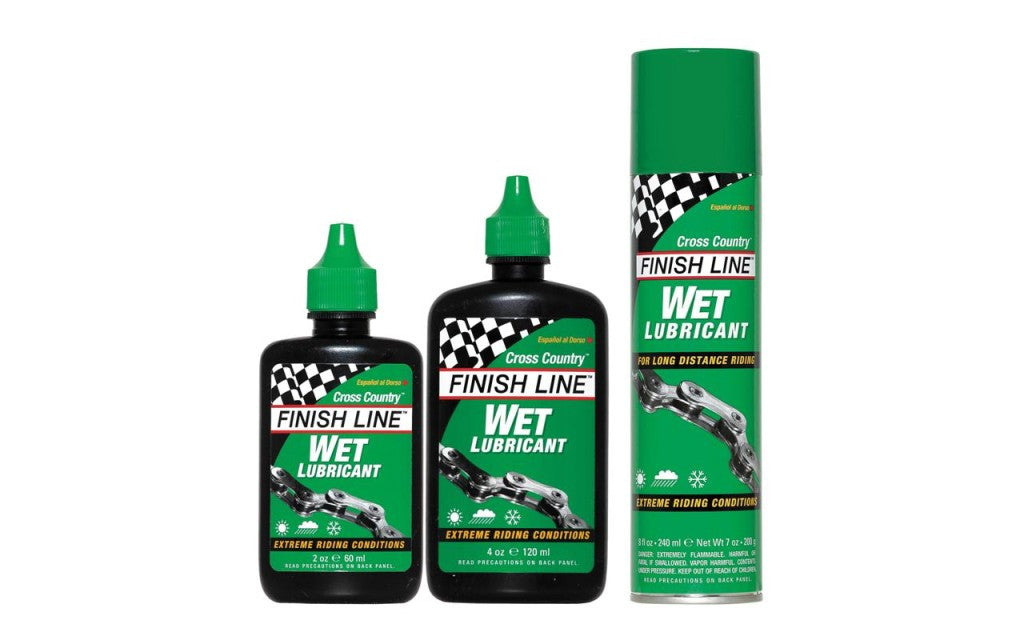
If you’re riding in the rain, you’ll need a thicker all-conditions oil such as Finish Line Cross-Country WET (green).
Step #3: Lubrication
Your bike is still in the same position as in step 1. Leave a thin film of oil on your chain—believe me, just a few drops are enough; remember, too much is as bad as not enough! Run the chain through the drivetrain to let the oil penetrate for a few moments, always turning your crankset counterclockwise. Wipe off the excess again with a cloth, because it’s the inside of the links that needs lubrication, not the outside of the chain. When we leave excess oil on the outside, dirt can easily build up and damage your drivetrain, even ruin it. Normally, lubrication will last for a few rides of a few hours, and don’t forget to run a cloth over it before each ride to keep it clean—and if there’s still black on the cloth, I don’t add more oil. This maintenance routine also applies to mountain bikes; we’ll go into more detail in an upcoming segment for this slightly more demanding type of use.
Cleaning
All bikes need love—or “TLC,” tender loving care, if you prefer. A small, complete brush kit and a gentle soap, such as Finish Line Bike Wash, will keep your bike clean. If you’ve been riding on gravel paths or your bike has already seen a few outings, this will keep dirt from building up. Regular maintenance will keep your bike healthy and ultimately cost you less in repairs. Don’t put off buying brushes, soap and oil—they’ll save you a lot of trouble!
Ideally, always try to avoid having to use a degreaser. You’re now an informed cyclist! Just follow these steps and you’ll keep your drivetrain in good condition—clean and efficient. Proper lubrication will spare you from having to use a degreaser; if you do end up needing one, we’re preparing a video on how to use it correctly. You must be extremely careful, because if it’s used improperly, it can be very damaging to your parts and your bike.
Tip: Always remove the parts you want to degrease from your bike and clean them individually.
Have a great ride!